Remembering passwords for different websites and apps can be difficult. You may have several online accounts, and each one needs a different password. Using the same password everywhere is risky, while creating a new password for every account can become confusing.
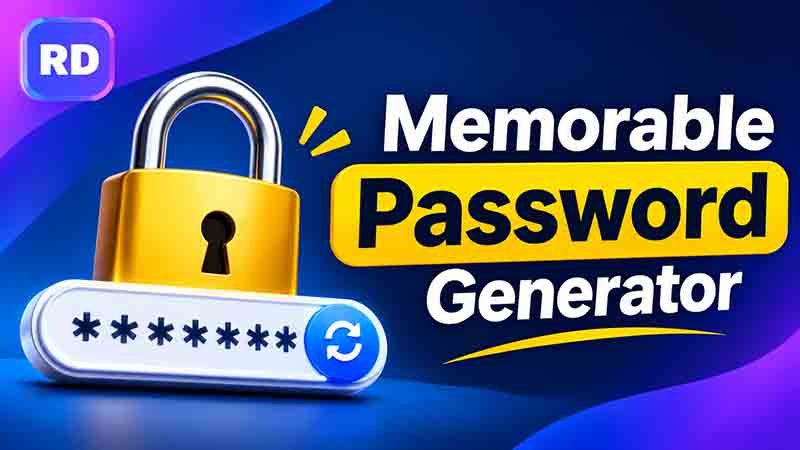
A memorable password generator can help solve this problem by creating passwords that are easier to remember while still following important security rules. Instead of using simple names, birthdays, or common words, you can create a password with a random structure that is easier to recall.
You can start by using the RandomsDex online password generator to explore different password combinations. Choose a suitable length and character type, then create a unique password for your account.
A good password should be difficult for other people to guess but simple enough for you to manage. This guide explains how to find that balance and use passwords more safely.
Table of Contents
- What Is a Memorable Password Generator?
- Why Are Memorable Passwords Important?
- How to Create a Memorable Password
- How Password Strength Is Calculated
- Practical Password Examples
- Types of Passwords You Can Create
- Tips for Creating Strong and Memorable Passwords
- Common Password Mistakes to Avoid
- Frequently Asked Questions
- Conclusion
What Is a Memorable Password Generator?
A memorable password generator is an online tool or method that helps create passwords that are easier to recall without depending on personal information or predictable patterns.
A normal password may contain random letters, numbers, and symbols. Although such passwords can be difficult to guess, they may also be hard to remember. A memorable approach focuses on creating a password structure that is easier for the user to recall.
For example, a password could use a few unrelated words combined with numbers or symbols. However, the words should be selected randomly rather than taken from personal details or familiar phrases.
The main purpose is to balance two things:
- Memory: You should have a reasonable chance of remembering the password.
- Security: Other people should not be able to guess it easily.
A memorable password generator is especially useful when you want a password that does not feel like a random collection of letters. Still, easy recall should never come at the cost of predictable patterns.
Remember that an easy-to-remember password is not automatically a secure password. Length, randomness, and uniqueness are also important.
Why Are Memorable Passwords Important?
People use passwords for email accounts, social media, online shopping, banking, and many other services. Remembering every password can be challenging, especially when each account requires a unique one.
A memorable approach can make password management easier in several ways.
1. Easier to Recall
A password with a structure you can remember may be easier to use than a short collection of unrelated characters. This can reduce the need to reset forgotten passwords.
2. Helps Avoid Weak Passwords
Many people choose simple passwords such as names, phone numbers, or birthdays. These details may be easy for others to discover.
A randomly created password avoids relying on information that people may already know about you.
3. Supports Unique Passwords
Every important account should have its own password. If one website experiences a data breach, using the same password elsewhere can put other accounts at risk.
4. Makes Daily Account Use Easier
A password that is easier to recall can make signing in less frustrating. You can also save complex passwords in a trusted password manager instead of trying to remember all of them.
Using a memorable password generator can make it easier to explore different password styles before choosing one that suits your needs.
How to Create a Memorable Password
Creating a strong password does not have to be complicated. Follow these steps to make a password that is easier to remember and harder to guess.
Step 1: Choose a Suitable Password Length
Start with a longer password rather than a very short one. Length increases the number of possible combinations and makes guessing more difficult.
For important accounts, consider using a long, unique password or a randomly generated passphrase.
Step 2: Use Random Words or Characters
Choose unrelated words instead of a familiar sentence or phrase. Avoid using your name, family members’ names, birth date, or other personal details.
Random selection is important because common phrases and predictable word combinations may be easier to guess.
Step 3: Add Numbers or Symbols When Needed
Some websites require numbers, uppercase letters, lowercase letters, or special symbols.
You can explore a password generator with numbers and symbols if you need a combination that includes these character types.
Always follow the website’s password requirements.
Step 4: Check the Password Strength
Before using a password, consider its length and randomness. A long password made from predictable information may still be weak.
Avoid simple patterns such as:
- Password123
- YourName2026
- January@123
- 123456789
Step 5: Use a Different Password for Every Account
Never reuse one password across several important accounts. Create a separate password for your email, social media, shopping, and financial accounts.
If remembering all of them becomes difficult, use a trusted password manager.
Step 6: Store Your Password Safely
Do not save passwords in public documents, shared notes, or unprotected files. A password manager can store your login details in an encrypted vault.
A memorable password generator can help you explore different formats, but you should always check that the final password is unique and not based on a common phrase.
How Password Strength Is Calculated
Password strength depends on several factors, including password length, the number of possible characters, and how randomly those characters are selected.
A simple way to understand the number of possible combinations is to use this formula:
Total Combinations = Character Set Size ^ Password Length
The character set size means the number of different characters that can appear in each position.
For example:
- Lowercase letters: 26 characters
- Uppercase letters: 26 characters
- Numbers: 10 characters
- Common special symbols: the exact number depends on the selected set
Step-by-Step Calculation Example
Suppose a password uses lowercase and uppercase letters, numbers, and 10 selected symbols.
The total character set is:
26 + 26 + 10 + 10 = 72 characters
If the password contains 8 characters, the calculation is:
72⁸ = 722,204,136,308,736 possible combinations.
If the password contains 12 characters:
72¹² = 19,408,409,961,765,342,617,600 possible combinations.
This shows how increasing password length can greatly increase the number of possible combinations.
However, this formula assumes that characters are selected randomly and independently. It does not mean every password with these character types is equally secure. Predictable words, repeated patterns, and personal details can reduce real-world security.
Practical Password Examples
The following examples show different password styles. They are examples for learning, not passwords you should use for real accounts.
| Password style | Example | Main feature |
|---|---|---|
| Simple word | BlueGarden | Easy to read but predictable |
| Word combination | River-Candle-Map | Uses unrelated words |
| Mixed characters | R7!mQ2#vL9 | Contains different character types |
| Long passphrase | Cloud-River-Window-Train | Longer and easier to picture |
| Random combination | T8@kP4!zN6 | Random character pattern |
A long combination of unrelated words can be easier to remember than a short random string. However, it should be generated randomly, not copied from a famous quote or common phrase.
A memorable password generator can help you understand these different formats and choose a style that works with your account’s password rules.
You can also learn more about creating a strong password by following practical security rules.
Types of Passwords You Can Create
Different websites have different password requirements. Understanding the available styles can help you choose the right format.
1. Word-Based Passwords
These passwords use multiple unrelated words. They can be easier to remember, especially when the words create separate mental images.
Avoid familiar phrases, song lyrics, quotes, or common expressions.
2. Passwords With Numbers and Symbols
Some services require numbers and special characters. Adding these characters can increase the possible character set, provided the password is also long and randomly generated.
3. Long Random Passwords
Long passwords can offer many possible combinations. For example, a 24-character password generator can help create a longer password when a website supports that length.
4. Random Secure Passwords
A random password uses characters selected without predictable patterns. You can explore a random secure password generator to understand this password style.
5. Passwords Without Repeated Characters
Some users prefer passwords that do not repeat the same character. A password generator without repeating characters can help explore this format.
Removing repeated characters is a preference, not a guarantee of better security. A sufficiently long and random password matters more.
6. Pronounceable Passwords
Some passwords use letter combinations that are easier to read or say. You can explore a pronounceable password generator to learn about this style.
However, pronounceable passwords should still be generated randomly. Common words and predictable combinations may be easier to guess.
Tips for Creating Strong and Memorable Passwords
Follow these practical tips when creating passwords for your online accounts.
Use Unrelated Words
Choose words that do not naturally belong together. Random combinations are less predictable than familiar sentences or common expressions.
Avoid Personal Information
Never use your birthday, phone number, address, pet’s name, or other information that someone could find online.
Make Passwords Long Enough
A longer password generally provides more possible combinations. Do not rely only on uppercase letters or symbols to make a short password secure.
Never Reuse Important Passwords
Use a unique password for every important account. This limits the damage if one password becomes exposed.
Use Multi-Factor Authentication
Enable multi-factor authentication (MFA) wherever it is available. It adds another security step, such as an authentication app or security key.
Consider a Password Manager
A password manager can generate, store, and fill in unique passwords. This is often more practical than trying to remember every complex password yourself. memorable password generator
Check the Website’s Requirements
Some websites do not allow certain symbols or have maximum password lengths. Always check the requirements before creating a password.
Common Password Mistakes to Avoid
Even a password that looks complicated can be weak if it follows a predictable pattern.
Avoid these common mistakes:
- Using the same password on multiple websites.
- Adding only a number to a common word.
- Using personal information in passwords.
- Choosing short passwords for important accounts.
- Sharing passwords through public messages.
- Saving passwords in unprotected documents.
- Using familiar phrases or keyboard patterns.
- Ignoring multi-factor authentication.
If you think a password has been exposed, change it immediately on the affected account. If you reused it elsewhere, update those accounts too.
Frequently Asked Questions
1. What makes a password memorable?
A password may be easier to remember when it uses a structure or combination of unrelated words that you can recall. It should still be long, random, and unique.
2. Is a memorable password safe?
It can be safe if it is sufficiently long, randomly created, and not based on personal information or common phrases. Easy-to-remember does not automatically mean secure.
3. Should I use words or random characters?
Both can work. A long combination of randomly selected words can be easier to recall, while random characters can provide a different password format. The important factors are length, randomness, and uniqueness.
4. How long should my password be?
Longer passwords are generally better. For important accounts, use a long unique password or passphrase that meets the website’s requirements. A password manager can help you manage it.
5. Should I add numbers and symbols?
You can add numbers and symbols when the website supports or requires them. However, length and randomness are more important than simply adding predictable characters.
6. Can I use the same password for different accounts?
No. Reusing passwords creates a security risk. If one account is compromised, other accounts using the same password may also be affected.
7. Is an online password generator useful?
Yes. An online generator can quickly create random password combinations and save time. Choose a trustworthy tool, avoid entering existing passwords into unknown websites, and use a secure method to store the result.
Protect Your Passwords With Better Security Habits
A strong password is only one part of online security. You should also keep your devices updated, avoid suspicious links, enable multi-factor authentication, and use a separate password for each important account.
Conclusion
A memorable password generator can help you create passwords that are easier to recall without relying on predictable personal details. The best approach is to use long, random combinations, avoid reusing passwords, and store them safely.
A memorable password generator is useful as part of a wider security routine, but no password style can protect an account on its own. Combine unique passwords with a password manager and multi-factor authentication to improve your online safety.
For more practical guidance, read the CISA guide to using strong passwords. It explains why strong passwords and good account-security habits matter.